
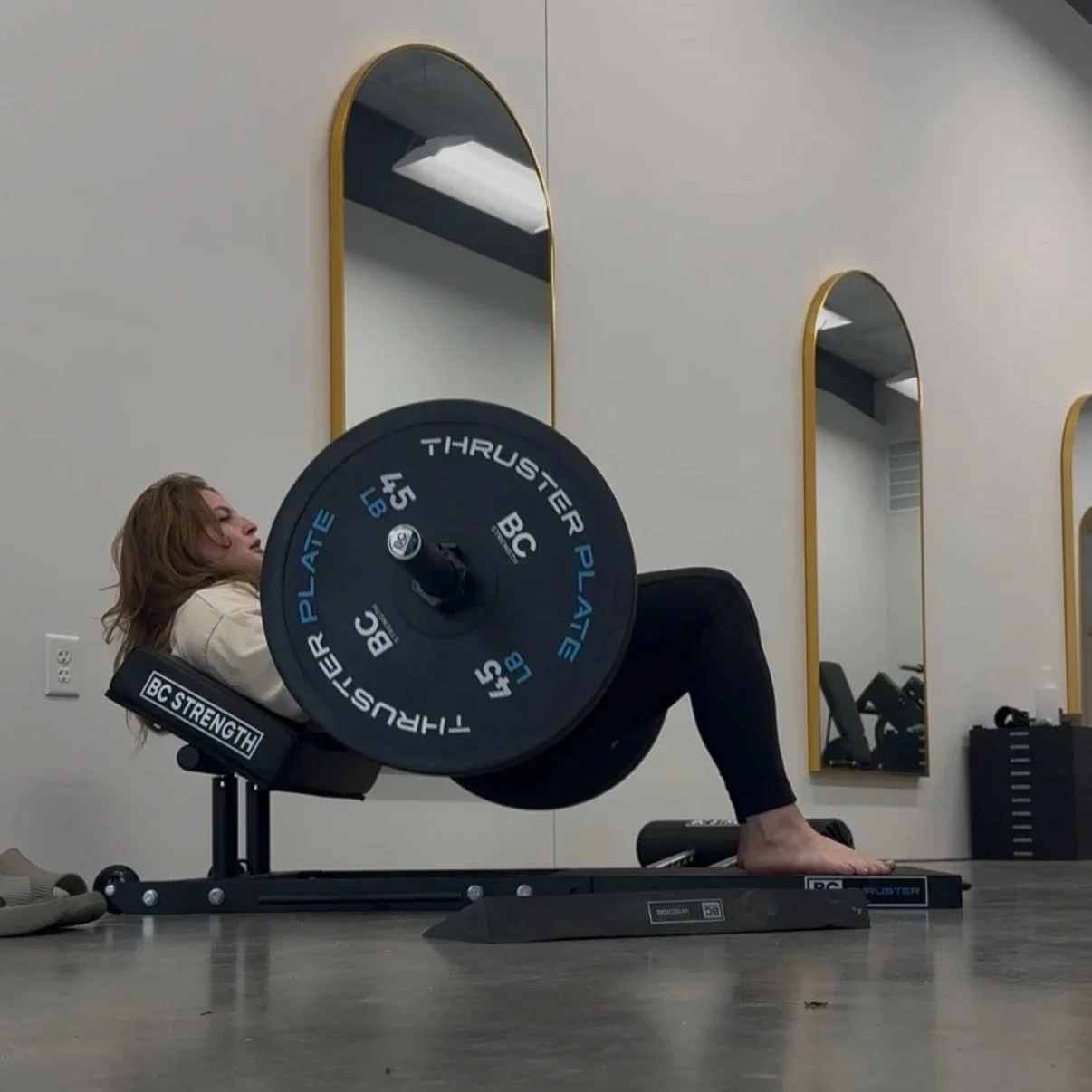
I refuse to hip thrust in public
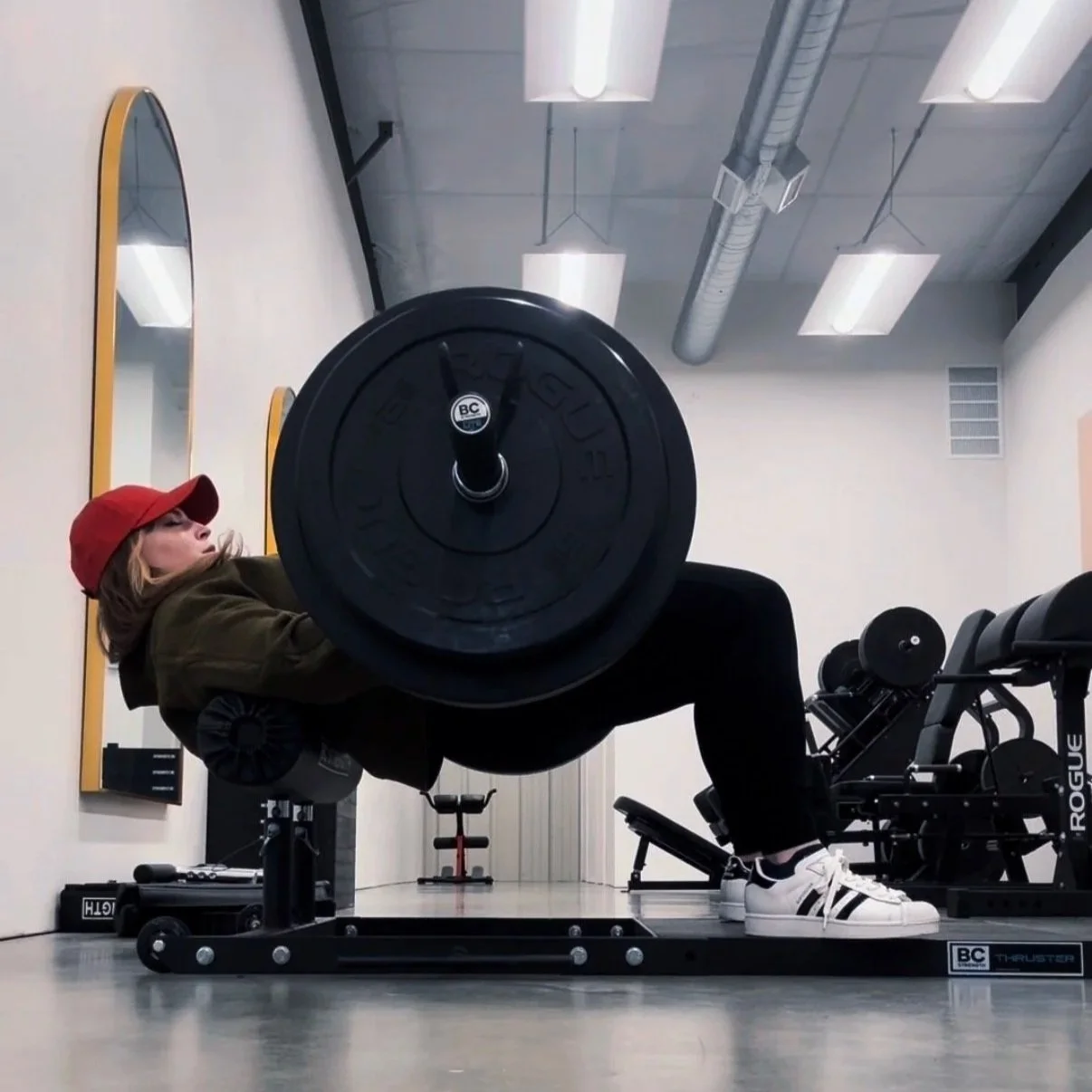
Hip thrusting in a private gym in Manhattan, Kansas at Gym Pods.
By the time hip thrusting became a popular exercise for training glutes, I was already at the end of my rope with traditional gyms. I had been dealing with the awkwardness for over a decade.
I started lifting weights in 2012 while in college. I remember sitting on a bench reviewing a basic body building plan. I was focused on getting the form correct - I knew that the fundamentals were key. I played basketball through school and focusing on the fundamentals was ingrained in me by my grandfather; he was a basketball coach who emphasized focusing on fundamentals throughout my life.
This mindset is something I apply to everything I do. He was famous for saying (not in these exact words) “you have no business doing fancy plays if you can’t even rebound.” With this in mind, I knew form would be critical in getting the results I was after. I pulled up a few YouTube videos to help me remember proper form.
In the first video, the guy was talking about all the idiots at the gym who don’t know how to properly place the bar during squats. “Awesome,” I thought. “That’s going to be me.” I had no idea what I was doing. I was afraid I was going to embarrass myself.
Feeling worse but knowing I had to start somewhere, I stumbled around the gym trying to figure out how to use the equipment without looking like a total rookie. I remember exactly how I felt when I made my way to the deadlift platform. My thoughts were racing as I struggled to load the 45-pound plates onto the bar. The bar dropped, a plate rolled away, and I felt like a complete phony. I didn’t belong there. I had no idea what I was doing.
I finished the first few exercises and moved on to leg press. There was only one machine. I sat down to wait for the person using it, but as soon as he finished, a group of five guys jumped in—clearly his friends. I decided to wait, telling myself I could use this as an opportunity to practice patience, which I did not have.
Twenty minutes later, I was still waiting. They weren’t going to be done anytime soon, and I needed to leave to get ready for work.
I walked out of the gym thinking, “This is insanity. People actually do this every day?”
I struggled through gym workouts for the next 10 years. It never got easier, and I hated every minute of it. I tried other types of workouts, but I always came back to the same conclusion: heavy weights are truly the gold standard for transforming your body. The thing that was frustrating was that I enjoyed the weight training part - I just really, really hated the gym part.
Fast forward to 2023. I had just moved to a new town and joined a brand-new gym. It was enormous, and I thought the experience might finally be different. In a gym that size, I assumed the usual problems wouldn’t exist.
I showed up ready to start my workout, but that familiar frustration came rushing back as soon as I saw the relatively small weight training area packed with people. I got through my first exercise and moved to the Smith machine. The moment I loaded the bar, someone stood right behind me, awkwardly trying to make eye contact. I looked up and was immediately asked the dreaded question: “How many sets do you have left?”
That was it.
I was done. The purpose of going to the gym was to work out and prioritize myself, but this experience was anything but that. I hated everything about it.
I went home and immediately started venting to my boyfriend. I told him I was going to build a home gym. He reminded me that we were about to move, and transporting all that equipment would be a nightmare.
That’s when the idea clicked.
Why isn’t there a gym equipped with heavy weights that I can book and use privately—like the Airbnb of gyms?
That question is where this journey began. Tired of the all-too-common frustrations of traditional gyms, I knew something entirely different needed to be created. Gym Pods was designed to feel nothing like a traditional gym. Instead of being frustrating and stressful, it is peaceful and private—a space free of judgment, anxiety, lines, and waiting.
If you believe that people shouldn’t have to deal with common gym frustrations and you’d like to create a private gym in your community, visit thegympods.com/partner
The Gym Pods Guide to Building Lasting Healthy Habits
A practical, psychology-backed roadmap to help you stay consistent, motivated, and confident in your fitness journey.
Many of us have tried to make healthy changes before — only to fall off, get discouraged, or start over again and again. Whether you're working on your fitness, your nutrition, or any other personal goal, the methods in this guide will help you finally make changes that stick.
And while this is written with fitness in mind, these principles work for anything in life.
1. Why Change Is Hard — And What to Do About It
If you’ve struggled to make progress in the past, you’re not broken. Your brain is doing exactly what it’s designed to do: keep you safe, not happy. Safety to your brain means predictability. Even unhealthy routines feel “safe” because they’re familiar.
This is why repeated failed attempts can create internal beliefs like:
“I’m just not good at sticking to things.”
“The gym is too hard for me.”
“Diets never work — why bother?”
The truth? These beliefs are outdated. They were formed from past experiences, not who you actually are now. Your job now is to update them — and you can.
2. Step One: Change Your Beliefs About Yourself
Lasting change happens from the inside out. Here’s how to build a belief system that supports you instead of sabotaging you.
A. Your Future Self
Think about the future version of yourself you want to become — your “highest self.” Don’t check out yet — this isn’t mystical, it’s actually one of the most practical tools for growth. The biggest companies in the world use a version of this idea: they call it their mission and vision. Your highest self is simply your personal mission and vision.
Ask yourself: What decisions does that version of me make? How do they speak to themselves? What do they believe about their capability, their discipline, their worth?
Getting clear on your highest self helps you understand the beliefs you need to build today. The more often you act in alignment with that future identity, the faster you become it.
B. Change Your Beliefs & Rewire Your Subconscious
If you are the type of person who has tried and failed in the past to lose weight, you should really spend some time figuring out your internal beliefs. Chances are you have limiting beliefs that are holding you back - this could be the missing key.
“I consistently follow through with my diet and fitness goals.”
“I am the type of person who prioritizes health and fitness.”
“I love caring for my body by being active.”
“I choose to live a healthy, active lifestyle.”
I personally listen to hypnosis playlists overnight that repeat phrases that are aligned with the future version of myself that I am striving for - here is a link to an example on Spotify.
Changing your beliefs about yourself is the key to how you change your identity on the deepest level.
C. Look for Evidence That Supports Your Beliefs
Your brain believes what you repeatedly show it.
Ask yourself:
Do you go to work every day?
Do you brush your teeth?
Do you show up for the people you love?
These are proof that you are capable, consistent, and trustworthy. Look for evidence daily that contradicts the belief "I can’t stick to things."
D. Set “Can’t Fail” Goals
Most people fail because they start with goals that are too big. Instead, start with goals so small you can’t fail:
Go to the gym 1 time per week
Do 1 push-up per day
Walk 10 minutes per day
Small goals build confidence → confidence builds identity → identity drives behavior.
This is especially important for nutrition. You cannot go from takeout-heavy eating to bodybuilder-clean eating overnight.
Start by adding, not restricting:
Add 100 oz of water a day
Add more protein
Add more veggies or fruit
Once those are natural, then add a new habit.
E. Prioritize Activity — It Changes Everything
Movement is more powerful than people realize. You’ve probably heard:
“You can’t outwork a bad diet.”
This belief causes people to not emphasize being active. Activity (raking the leaves, pulling the weeds, organizing the house) burn calories and make it easier to burn more calories than you consume:
Light daily walking can increase burn by 300–500 calories
Add more activity and your burn can reach 3,000+ calories/day
This means you can eat satisfying meals and still be in a deficit.
Using an Oura Ring or fitness tracker helps tremendously because you can see your daily burn — and it becomes motivating.
3. My Four-Month Starter Plan
This is what I wish I had when I first started.
If you follow this, you will see momentum build faster than you expect.
Month 1: Build the Foundation
Take your body measurements, body scan, and weight
Create your belief-building audio and listen nightly
Invest in a tracker that shows calories burned
Walk 10 minutes daily
Go to the gym 1x per week — only do movements you enjoy
Book your Gym Pods sessions a week in advance
Drink 100 oz of water daily with electrolytes
Optional tools that helped me:
Oura Ring, smart measuring tape, walking pad, Hume Body Pod
Month 2: Add Just a Little More
Keep listening to the audio nightly
Increase walking to 20 min/day (or 10 min twice daily)
Join a weekly social activity (walking club, volleyball, pickleball)
Prioritize 80g of protein/day (again — don’t cut anything yet)
Stay consistent with 100 oz of water
Continue going to the gym 1x per week
Do monthly body measurements/scans
Month 3: Build Momentum
Continue everything from months 1–2
Increase gym sessions to 2x per week
Stay focused on enjoying the movements you choose
Month 4: Step Into Your New Identity
Continue everything above
Increase to 3x per week at the gym
By month four, you’re living a healthier lifestyle without the burnout or pressure that comes from trying to overhaul everything at once.
4. The Hard-Earned Lessons I Wish Someone Told Me
These principles would have saved me years:
1. Focus on changing your lifestyle, not losing the weight.
If you lose weight without changing habits, it will come back. Lifestyle is the real transformation.
2. Play the long game — the time passes anyway.
Rushing cost me 15 years. Slow, steady habits would have gotten me there so much faster.
3. Consistency is everything.
Do what you don’t hate. If you enjoy it, you’ll repeat it — and repetition creates results.
4. Don’t go from 0 to 100.
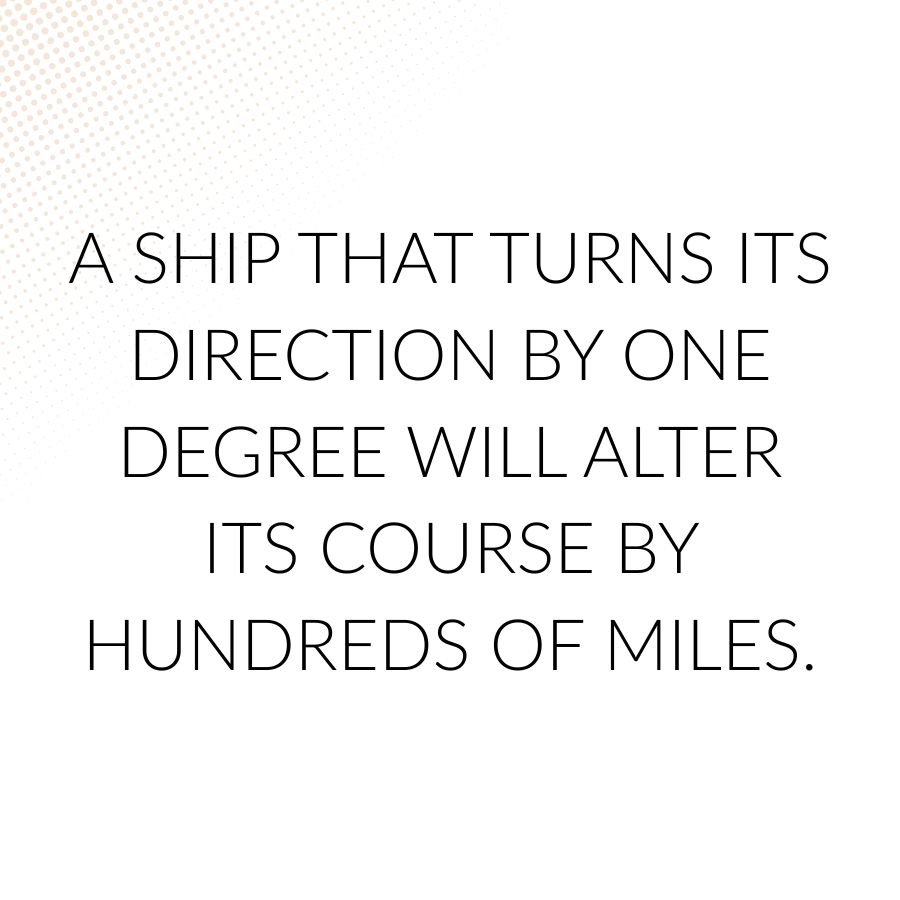
Big jumps create burnout and self-doubt - this is how many people create negative beliefs about themselves. One of my favorite quotes: "A ship that turns its direction by one degree will alter its course by hundreds of miles."
Small steps create momentum and confidence.
5. Protect your belief system.
Don’t commit to anything you know you won’t stick to. Your self-trust is the foundation of your transformation.
Final Thoughts
You are completely capable of creating a healthier, stronger, more energized version of yourself — not by being perfect, but by being consistent.
At Gym Pods, everything is designed to help you build trust with yourself, stay consistent with your habits, and enjoy the process of becoming the person you want to be.
Small changes → big results → lasting identity shifts.
You’ve got this.
Want to learn more? Here is a list of some of my favorite books:
Change Your Paradigm, Change your Life by Bob Proctor
Blink by Malcomb Gladwell
The Big Leap by Gary Hendricks

Hip Thrusting - The Holy Grail of Glute Gains
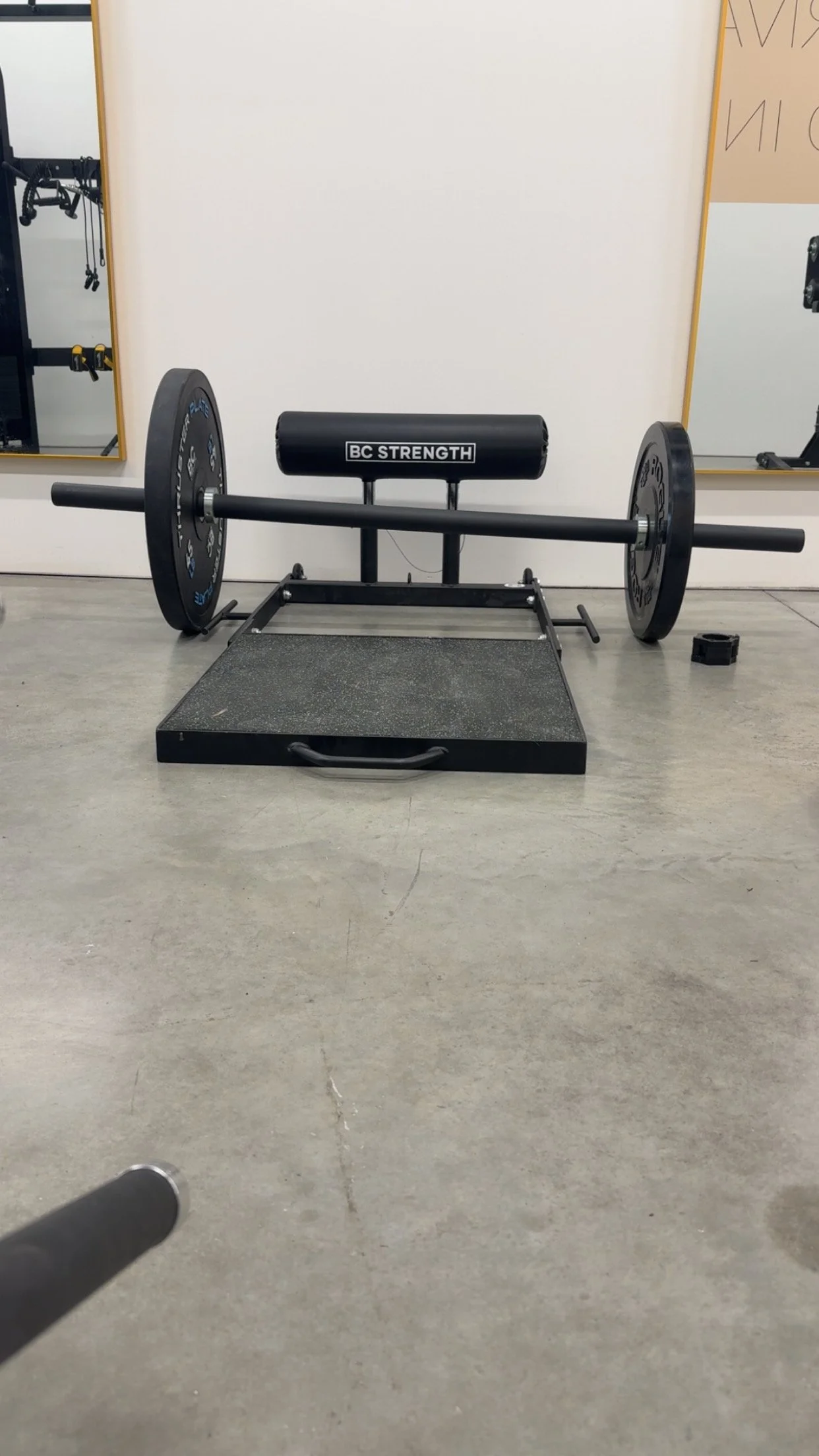
Hip Thrust platform at gym in Manhattan, Kansas.
If you’re serious about growing your glutes, there’s one move you simply cannot skip: hip thrusts. Ask any coach or fitness pro — this exercise is widely regarded as the single most effective movement for glute development. And here’s the thing: to get results, you’ve got to lift heavy.
Why Hip Thrusts Are Non-Negotiable
Hip thrusting targets the glutes more directly and intensely than squats or deadlifts. Want to build that posterior chain? This is your golden ticket.
Reps and Load: Aim for 3 sets of 8–12 reps. The sweet spot is choosing a weight that challenges you — where you’re grinding out rep 8, and barely squeezing in 12. If you can do more than 12? Add weight.
Struggling to Set Up Your Hip Thrusts?
If you’ve ever tried to hip thrust with traditional weight plates, you know the pain: hoisting a loaded bar over your legs to get into position is awkward and tough. That’s why our goal was to make it as easy as possible for you here at the Gym Pods Manhattan, Kansas location.
Hip Thrust Platform — Built for Real Gains
Here’s what makes our setup special:
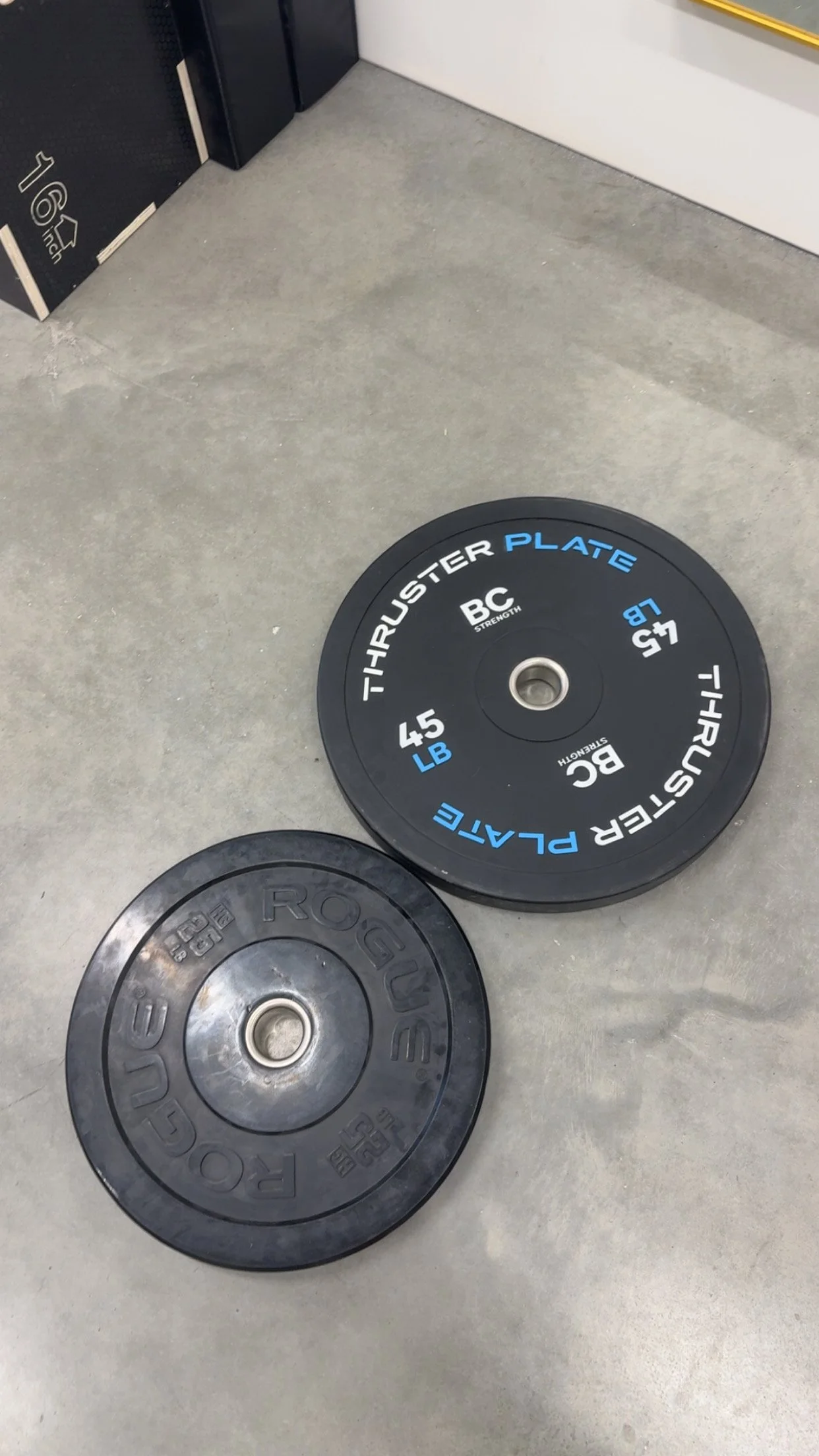
Extra-Tall Plates: These aren’t your average 45s. The added height lifts the bar further off the floor, making it easier to roll into position without contorting your body or wasting energy before the lift even starts. It also makes it easier to get the bar off the floor for your first rep which can be a major challenge once your start lifting really heavy.
Adjustable Back Rests: Raise or lower the back support to fit your build and desired range of motion. Swap between the rounded pad or flat pad depending on your comfort and style.
Form Check-Ready: Use the tripod station to film your form — because even the best lift won’t get you results if it’s done wrong. Watching your mechanics helps fine-tune your technique and avoid injury.
Trainer Access: Not sure if your form is dialed in? Reach out to our trainer - to get his info, reach out to admin@thegympods.com. You’ll get tips, feedback, and personalized cues.
Extra Thick Bar: The bar is extra thick which makes it less painful on the hips. If you need some padding, use the Rogue hip thruster pad (located in the basket with the other accessories). A normal barbell pad won’t fit around the special hip thruster bar.

Pro Tip: Use It for Bulgarian Split Squats, Too
We won’t pretend to love split squats — but the hip thrust platform makes them slightly less brutal. It offers stable support and just the right height to crush your lower body without compromising balance.
Glute gains are built on consistency, heavy weight, and the right setup. With Gym Pods’ custom-built hip thrusting platform, you’ve got everything you need to train smarter and lift heavier. So load up those tall 45s and let’s grow.



How Physical Therapists Can Extend Care Beyond the Clinic
For physical therapists, client care doesn’t stop at the end of a treatment plan.
Recovery is a continuum—and often, the most critical work begins after formal therapy ends. The transition from guided rehabilitation to independent movement can be fragile, especially for clients who are:
Not yet confident in traditional gyms
Still managing pain or mobility restrictions
Needing controlled, quiet environments to rebuild function safely
As therapists, we’re trained to bridge gaps in movement—but what about the environmental gap that so often derails recovery?
The Missing Middle: Between Rehab and the Gym Floor
Most commercial gyms aren’t built for your clients.
Fluorescent lighting, loud music, crowded spaces, and unsupervised equipment usage can make even the strongest client think twice before showing up. For clients navigating chronic pain, post-op restrictions, or sensory sensitivities, that environment can feel like a non-starter.
The reality? Many fall through the cracks—not because they lack motivation, but because they lack access to the kind of environment that supports mindful, focused movement.
What If You Had a Space Just for Them?
Imagine having access to a private, fully-equipped training space—one where:
You can continue working 1-on-1 with clients post-discharge
They can safely continue their rehab routines without sensory overload
You control the environment, schedule, and equipment flow
There’s no pressure to upsell memberships or share space with gym-goers
This isn’t a traditional clinic. And it’s not a traditional gym.
It’s a hybrid space that exists in the middle—ideal for physical therapists, corrective exercise specialists, and movement professionals who want more control over outcomes and experience.
Reimagining the Role of the Therapist
As PTs evolve into movement strategists, wellness leaders, and trusted long-term partners in health, the need for flexible, private spaces is growing.
You may already be seeing clients who:
Want personal training post-rehab
Ask you for safe workout options
Are stuck between “not injured enough for therapy” and “not strong enough for the gym”
You likely already are the solution.
You just might not have had the space for it—until now.
The Private Fitness Studio Model That’s Gaining Ground
Across the country, therapists and movement professionals are beginning to rethink the physical environment of their work. They’re creating their own training models in private, bookable studios where they:
Set their own hours
Train clients without clinic overhead
Offer hybrid recovery/fitness support
Build stronger community referrals
If this sounds familiar, you might be closer to this model than you think.
Could Gym Pods Fit Into Your Practice?
If you’ve ever wished you had a space to train clients without noise, pressure, or distractions, this concept may be worth exploring in your area.
Gym Pods is a private, tech-enabled workout spaces designed to offer a fully independent, flexible fitness experience. While many use them solo, some practitioners are beginning to see them as an opportunity to:
Host sessions
Offer remote coaching + in-person checkpoints
Expand their business without taking on a full lease
If you're curious about how this model could support your practice, or you’ve considered offering a space like this in your community, we’d love to connect.
Connect with us on social media to learn more about Gym Pods and explore how this concept could support your work—or become an extension of your business.

Why the Public Gym Model is Broken
Let’s be honest: traditional gyms aren’t for everyone.
In fact, they were never designed to be.
If you’ve ever walked into a gym and felt:
like you didn’t belong,
overwhelmed by noise, crowds, or confusion,
or completely unseen in a space that claims to support everyone...
You're not the problem.
The system is.
The Truth About Public Gyms
Public gyms weren’t created to empower you. They were built to serve:
The already-fit
The social butterflies
And the "gym bro" culture that thrives on dominance, performance, and peacocking
If you're not there to compete, pose, or chat up the person on the treadmill next to you, good luck finding a space that actually supports your goals.
Meanwhile, if you're a new mom, someone who’s neurodivergent, or just hate being watched while you’re trying to better yourself—you’re forced to adapt to a space that never considered your needs to begin with.
We Don’t Adapt People to the Gym. We Adapt the Gym to the People.
That’s the idea behind Gym Pods.
We’ve completely rethought what a fitness space should be—starting with one controversial belief:
Privacy is a feature. Not a flaw.
Public Gyms Expect You to Conform
Let’s break down just a few of the ways public gyms fail most people:
Sensory overload – blaring music, wall-to-wall mirrors, bright lights
No personal space – waiting on machines, sweaty equipment, awkward proximity
No real flexibility – either you show up during peak hours and fight for space, or you're out of luck
One-size-fits-all design – no consideration for sensory needs, introverts, new parents, or people with trauma
And don’t even get us started on the locker room experience.
Gym Pods: The Antidote
Now contrast that with Gym Pods, a private, bookable fitness experience designed to:
Eliminate gym anxiety
Create space for focused, uninterrupted workouts
Empower people to learn, experiment, and grow—without judgment
Give new moms a place where the baby comes with, not stays behind
Provide a clean, quiet, inclusive space for neurodiverse and high-sensitivity individuals
If This Offends You, We’re Not for You
If you love the energy of crowds, live for small talk at the squat rack, and think everyone should just “toughen up”—Gym Pods is not for you.
But if you’ve ever said:
“I wish I could just have the gym to myself.”
“I feel like everyone is watching me.”
“I just want to get in and out without dealing with people.”
You’ve found your place.
Now Open in Manhattan, KS
We’re not here to impress influencers or pack people into a warehouse with EDM blasting.
We’re here for the quiet grinders, the late-night lifters, the first-timers, and the ones who are finally putting themselves first.

Gym Pods, because some things should be done in private.
Gym Pods - Because Some Things Should Be Done in Private
When I first set out to change my body, my goal was clear: enhance my glutes and hamstrings. I quickly learned that the only real way to see transformation was through heavy lifting and a consistent, bodybuilding-style routine. I was determined to build strength and reshape my body— but the path wasn’t as straightforward as I’d hoped.
It all started in 2013 at Washburn University’s rec center. I vividly remember walking into the weight room, feeling excited and ready to train. But I was the only woman in a sea of bro-leaning guys, loudly grunting and dominating all the machines. Despite enjoying the actual lifting part, I felt incredibly awkward. The environment was intimidating — the kind where you felt you didn’t belong, like an outsider trying to find her place amid a mountain of testosterone.
Over the next decade, I kept trying different gyms in different cities, hoping that maybe, just maybe, I’d find an environment where I could focus and grow without feeling uncomfortable. But each time, I faced the same reality: long waits for equipment, crowded spaces, and the feeling that I was constantly in someone else’s way.
I’d show up motivated, eager to crush my workout. Then, I’d be confronted with the inevitable — waiting for nearly an hour just to use the leg press, as multiple guys hogged the same machine. Or I’d be in a crowded room, trying to get my dumbbell work in, feeling self-conscious about where I was in the space and whether I looked silly trying something new. And trying to learn a new move? That felt even more vulnerable. I was terrified of messing up in front of strangers and going viral for doing a machine wrong.
This experience wasn’t unique to one gym or one city — it was a recurring theme, year after year, that deeply affected my motivation. My hatred for public gyms grew larger than my passion for training. It became the biggest obstacle standing between me and my goals.
The frustration peaked around the time the hip thrust was identified as the best move for building glutes. I wanted to do it, but the thought of doing hip thrusts in a crowded gym, surrounded by strangers, made me cringe. I believed some things should be done in privacy — and that environment was a barrier I couldn’t overcome. The awkwardness, the waiting, the noise, the judgment — it all added up to a relentless mental drain that killed my motivation before I even picked up a dumbbell.
I knew I needed a different approach. I needed a space where I could focus, feel confident, and truly push myself without the fear of judgment or the constraints of crowds. That’s when I realized: the problem wasn’t my willpower — it was the environment I was in. And that insight became the driving force behind everything I wanted to create.
I considered building a home gym, but that came with its own issues. I moved frequently, didn’t want to lug around thousands of pounds of equipment, and definitely didn’t want to dedicate valuable living space to racks and barbells.
One day, I thought: Why isn’t there a private gym I can just book like an Airbnb—fully equipped, clean, and focused on strength training? And when I couldn’t find one… I built it.
That’s how Gym Pods was born.
A clean, bookable, private gym space with everything you need for a serious workout—no lines, no onlookers, no awkward moments.
Heavy weight training is the most effective way to reshape your body—but for many people, public gyms are more of a psychological barrier than a resource. I created Gym Pods for anyone who wants to train hard without the pressure, the crowds, or the awkward energy of a traditional gym.
This started as a solution for me. Now, it’s for all of us who just want to lift in peace.